Air and water3 min read
An air-quality tile can show a number and colour so quickly that you skip the explanation beneath them. Read the category as a communication tool with a defined scale. It is not a percentage of pollution in the air or a measurement of the dose a particular person has breathed during the day.
Read the guide ↗
Air and water3 min read
Two air-quality displays can disagree without either being a simple error. One may summarize current conditions while another predicts a different time period. Before choosing which tile to trust for a plan, read the timestamp, location and label that explain what each value is intended to represent.
Read the guide ↗
Air and water3 min read
A radon number becomes more useful when the testing method, location and dates remain with it. Before opening a kit or comparing an old result, read the complete instructions and appropriate local guidance. Testing is a defined measurement process, not a household experiment in changing windows until the number looks preferable.
Read the guide ↗
Air and water3 min read
A round device on the ceiling does not tell you which hazard it detects. A household alarm plan starts by identifying smoke, carbon monoxide and any combination units, then learning the actual instructions. Routine testing and emergency response are separate tasks, and the response should be understood before a warning occurs.
Read the guide ↗
Air and water3 min read
A water notice should be read for its exact instruction, affected area and current status. Boil water is not a universal response to every contamination problem. Before changing household routines, open the official local notice and identify which kind of advisory applies rather than relying on a shortened message from somebody else.
Read the guide ↗
Air and water3 min read
A bottle of water taken to a laboratory is not automatically a useful drinking-water sample. The sampling point, container, handling and requested tests must suit the question. If your home uses a private well, arrange appropriate certified testing and local guidance before collecting anything or purchasing a treatment device.
Read the guide ↗
Air and water3 min read
A community water-system report can explain where the supply comes from and what testing found during a reporting period. Read that period and system identity before interpreting a table. The document can inform good questions, but it should not be used to override a newer local advisory or answer every question about one household tap.
Read the guide ↗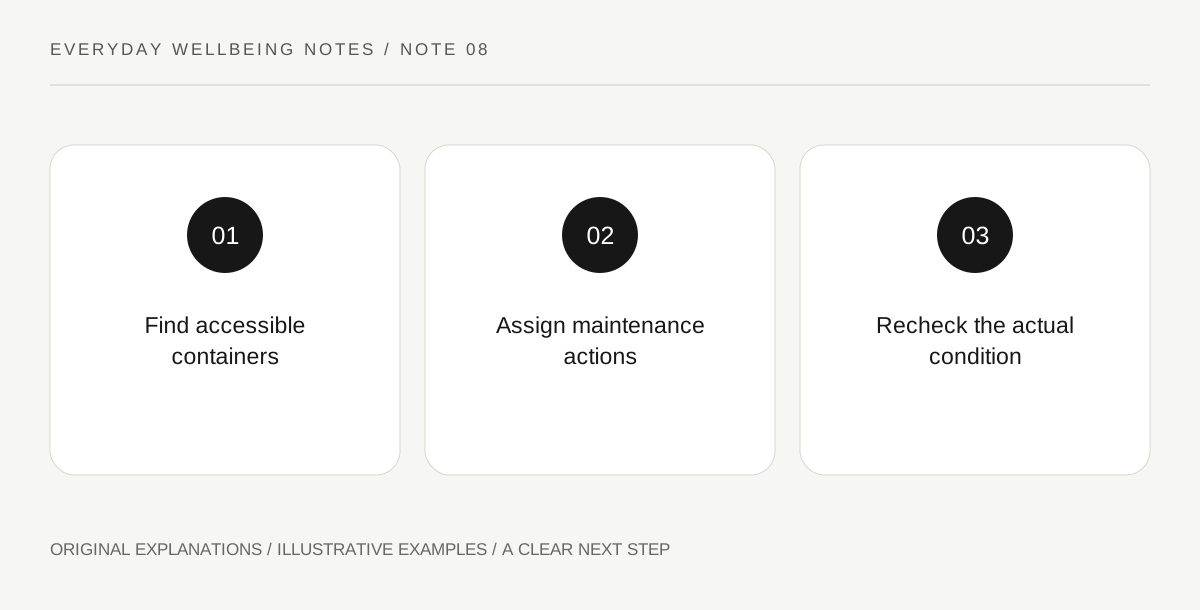
Household routines3 min read
A garden or balcony can collect water in small objects that are easy to overlook during ordinary tidying. Build a simple route through the containers you control and identify what can be emptied, scrubbed, covered or removed. This is a household maintenance task, not a promise to eliminate every mosquito or substitute for local public-health advice.
Read the guide ↗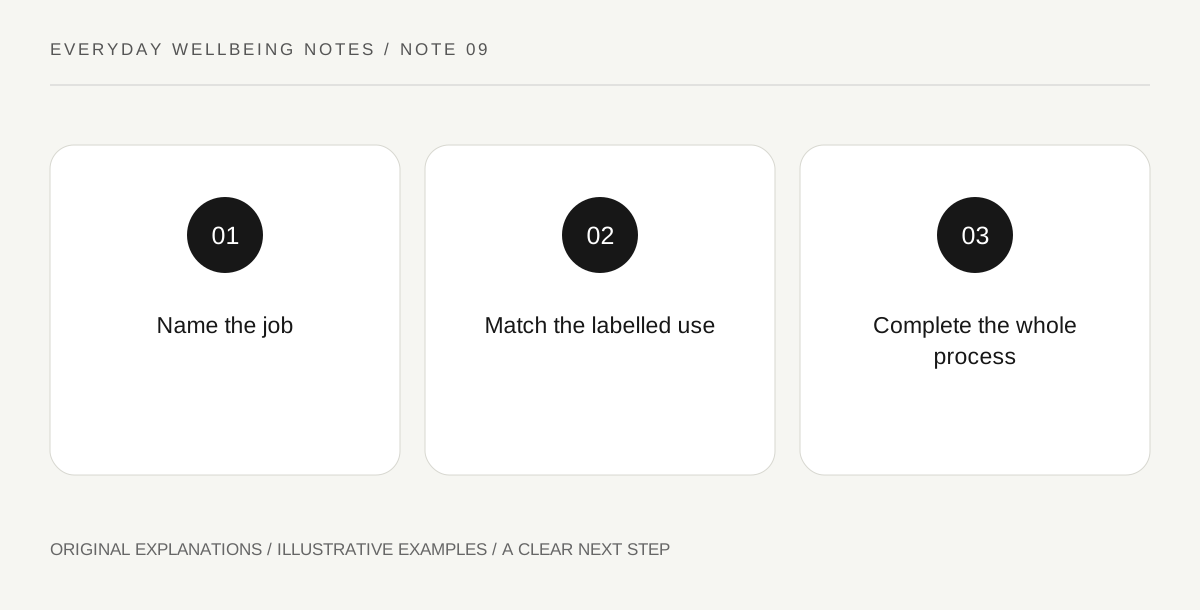
Household routines3 min read
A clean-looking surface and a disinfectant claim describe different things. Before choosing a household product, identify the task and read what the product is intended to do on that surface. Using more chemical strength or more products is not a substitute for matching the actual instruction to the job.
Read the guide ↗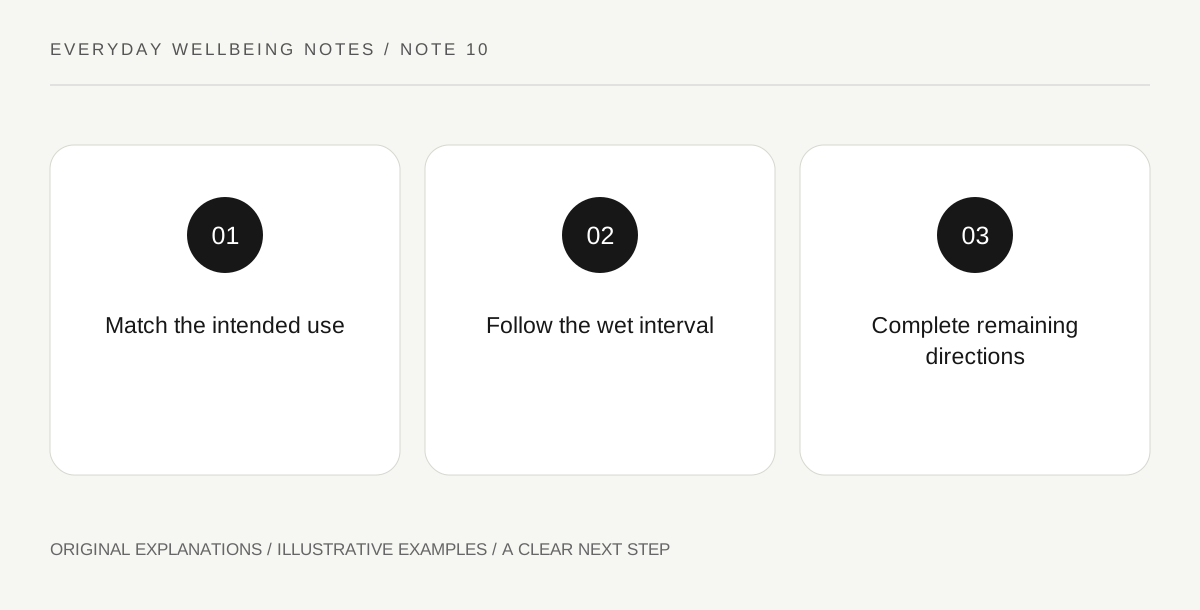
Household routines3 min read
A disinfectant label may specify how long a treated surface must remain wet for the stated use. That interval is not the same as how long you hold a wipe or how quickly a surface looks dry. Read the relevant direction before starting so you can follow the complete process rather than inventing a shortcut.
Read the guide ↗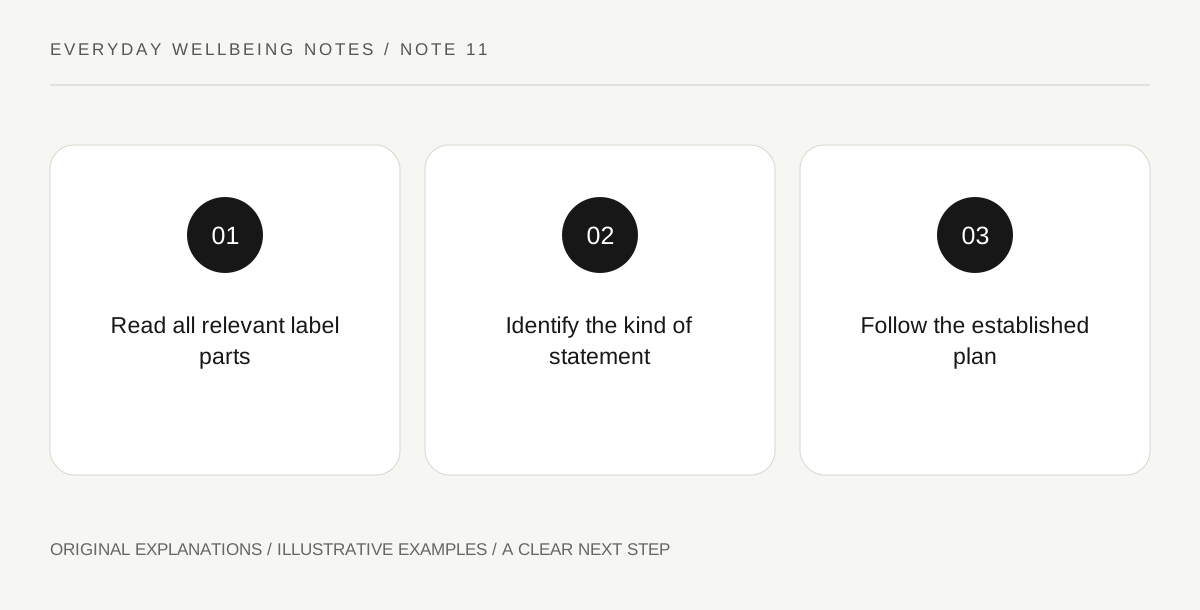
Food literacy3 min read
An ingredient list, a Contains statement and a precautionary May contain statement are different parts of a packaged-food label. Read them together rather than treating one missing phrase as an all-clear. For a known food allergy, follow the person’s clinical management plan and resolve uncertainty before eating or serving the product.
Read the guide ↗
Food literacy3 min read
A food-recall headline can name a familiar brand while the notice identifies a more specific product, package or production group. Open the official notice before deciding what is affected. Keep the physical package available, avoid tasting a suspect item and follow the notice’s actual handling instructions.
Read the guide ↗
Food literacy3 min read
A refrigerator control marked with numbers may indicate an adjustment level rather than the actual temperature inside. Read the appliance manual and use an appropriate appliance thermometer to understand the measurement. Keep the unit and reading context visible before assuming that a familiar dial position means the storage conditions are suitable.
Read the guide ↗
Food literacy3 min read
A vegetable can carry visible dirt without needing the same treatment as a countertop. Read its packaging and follow appropriate produce-handling guidance. Ordinary washing, prewashed ready-to-eat products and a recalled item are different situations, and none should be turned into an improvised experiment with household cleaners.
Read the guide ↗
Household routines3 min read
Pet bowls and feeding tools need a complete cleaning routine, including where they are handled and where they go afterward. Start with the item’s instructions and household needs. A quick rinse or a strong product chosen at random does not establish that the process is appropriate for the bowl, animal or surrounding space.
Read the guide ↗
Health evidence3 min read
A headline saying risk was cut in half can sound very different once you see the starting chance. Read the absolute numbers and the time period before deciding what the percentage describes. This is a numeracy exercise for understanding a report, not a calculation of your personal risk or a reason to change treatment.
Read the guide ↗
Health evidence3 min read
Two groups can have different health results without the headline establishing why. Before treating an association as an instruction, find out how people entered the groups and whether researchers assigned an intervention. This design question helps you read the claim accurately without either dismissing observational research or overstating what one report proves.
Read the guide ↗
Health evidence3 min read
A medical-device advertisement may display a certificate-looking image or regulatory phrase that seems reassuring. Identify exactly what status is claimed and which device it concerns. In the United States, establishment registration and device approval or clearance are different matters, so a familiar government acronym should begin a check rather than end it.
Read the guide ↗
Household routines3 min read
Products marketed against insects can be intended for different application sites. A spray for clothing or the surrounding area is not automatically a skin product. Before preparing for an outdoor activity, read the exact label and separate what the product is meant to treat from the benefit described on its front panel.
Read the guide ↗
Health evidence3 min read
A first-aid course can be online-only, instructor-led or a combination, and those formats do not necessarily provide the same assessment opportunity. Before enrolling, identify why you want the training and read the exact course description. A completion document should match the purpose you need it to serve.
Read the guide ↗