Choose a First-Aid Course by the Skills Component You Need
A first-aid course can be online-only, instructor-led or a combination, and those formats do not necessarily provide the same assessment opportunity. Before enrolling, identify why you want the training and read the exact course description. A completion document should match the purpose you need it to serve.
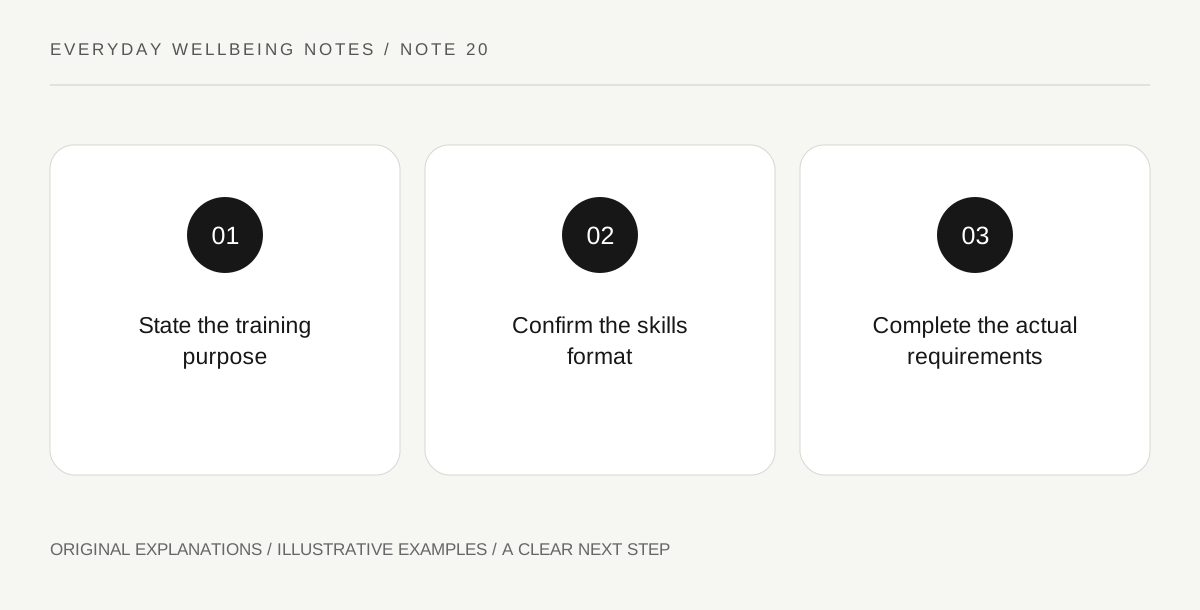
Original explanatory diagram. Read the full method and limitations below.
State the reason for training
Separate general learning from a requirement imposed by an employer, organization or role. If a certificate is required, obtain the exact accepted course and format from the responsible organization before purchase. Do not infer acceptance from a provider logo alone. The American Red Cross explains that online-only learning differs from formats offering an opportunity to demonstrate skills to an instructor, which can matter to the required outcome.
Find the actual skills arrangement
Read whether the course includes a practical session, what must be completed beforehand and how that session is scheduled. A blended course may require more than finishing an online module. Confirm the actual location, date, duration and entry requirements with the provider. Do not assume an appealing headline or a low online price includes a separately scheduled component. Keep the full course identity with the booking.
Check participation and accessibility needs
Ask the provider about the physical activities, equipment, language, accessible arrangements and other practical requirements relevant to your participation. Describe what you need without treating an online article as a substitute for the instructor’s guidance. If the published format does not fit, ask about an appropriate alternative before paying. A manageable course plan includes getting to the session and completing the assessment, not only finding time to watch the materials.
Plan learning beyond the completion screen
Follow the provider’s instructions for practice, refreshers, certification validity and any later renewal relevant to your purpose. Keep the original record where you can retrieve it. Do not treat a short article, an unverified video or this course-selection guide as training to perform a procedure. In an actual emergency, use the appropriate local emergency service and its instructions rather than searching your notes for an improvised technique.
Illustrative worked example
Illustrative example: An adult volunteer needs training accepted by a fictional organization. Before purchasing an online-only course, the volunteer asks the organization for its exact requirement and learns that a skills-assessed format is needed. The volunteer confirms a suitable session and its online prerequisites with the provider. This invented booking example gives no first-aid procedure and makes no claim about a real organization’s rules or current course availability.
Questions that come up
Does finishing an online module always satisfy a certificate requirement?
No. Check the exact course, assessment format and accepting organization’s requirements. A provider’s general reputation does not establish that every format it offers serves every role.
Can this article replace practical first-aid instruction?
No. It helps compare course formats and prepare enrollment questions. Learn procedures through an appropriate course and follow current local emergency instructions when help is needed, rather than improvising from a purchasing guide.
References and scope
These sources support the factual background. Examples and exercises are original illustrative teaching material. References do not imply endorsement.
- American Red Cross: online first aid — Online-only and formats with skills sessions differ; check the actual course and purpose before enrolling.