Give Pet Bowls a Cleaning Route That Does Not End in the Food-Preparation Area
Pet bowls and feeding tools need a complete cleaning routine, including where they are handled and where they go afterward. Start with the item’s instructions and household needs. A quick rinse or a strong product chosen at random does not establish that the process is appropriate for the bowl, animal or surrounding space.
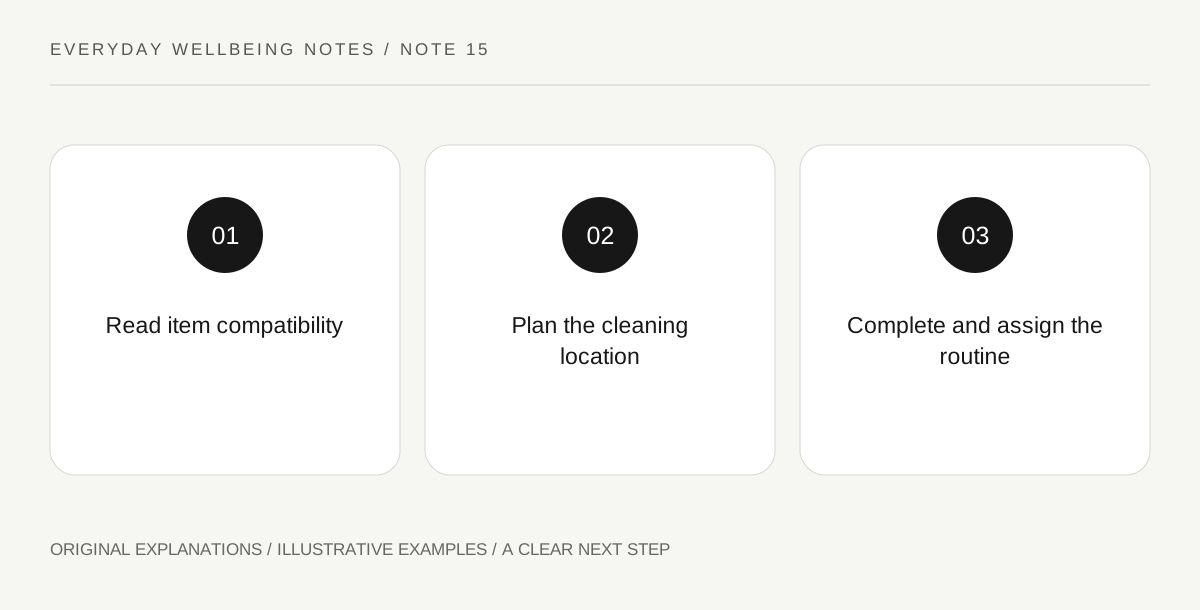
Original explanatory diagram. Read the full method and limitations below.
Identify the item and its permitted method
Read whether the bowl, mat or feeding tool is compatible with the proposed washing method. CDC provides guidance on cleaning and disinfecting pet supplies, with different considerations for different items and households. Keep an electronic feeder’s electrical parts outside any method not allowed by its maker. If instructions are unclear, ask the manufacturer or veterinarian rather than assuming every pet item can be immersed or put in a dishwasher.
Choose the cleaning place deliberately
CDC advises using a suitable cleaning location for pet items and avoiding food-preparation areas where possible. Plan where dirty items wait, which cleaning tools are used and how the area will be left afterward. Do not set a used bowl beside ready-to-eat food while searching for supplies. The objective is an understandable route from used item to cleaned item, not a claim that a pet’s belongings are either harmless or uniquely dangerous in every circumstance.
Follow the actual cleaning and finishing instructions
Use a compatible method and product according to its directions, including any required rinsing and drying before reuse. Do not add an unrelated disinfectant to a cleaning mixture or use a household chemical simply because its label sounds powerful. Keep cleaning products away from the animal as instructed. If disinfection is advised for a particular household situation, obtain the appropriate guidance instead of improvising concentration or contact time.
Make the frequency and handover explicit
CDC differentiates cleaning routines by use, including wet-food bowls versus dry-food and water bowls. Read the current guidance relevant to your setup and ask a veterinarian about individual animal or household concerns. Assign the task when care is shared, and keep clean items separate from those awaiting washing. A spare compatible bowl may help the routine only if it is actually cleaned and managed, rather than becoming another forgotten used item.
Illustrative worked example
Illustrative example: Two adults share care of a pet and each assumes the other cleans the bowl. They read the item’s care instructions and CDC guidance, choose a suitable cleaning location, assign the routine and identify where cleaned bowls wait for reuse. An electronic feeder component is handled only by its stated method. This invented arrangement does not prescribe veterinary treatment or claim a measured reduction in illness.
Questions that come up
Can I use any disinfectant if I rinse afterward?
No. Product compatibility and permitted use must be established first. Follow the actual directions and seek appropriate guidance for pet supplies rather than treating rinsing as permission to apply an unsuitable chemical.
Does buying a second bowl solve the cleaning routine?
Only if the household manages both bowls correctly. A spare can support an agreed washing and drying process, but it does not replace that process or establish which items are ready for use.
References and scope
These sources support the factual background. Examples and exercises are original illustrative teaching material. References do not imply endorsement.
- CDC: cleaning pet supplies — Pet-supply cleaning depends on the item and household; follow compatible product and equipment instructions.