Produce Washing Is a Food Task, Not a Household-Disinfectant Task
A vegetable can carry visible dirt without needing the same treatment as a countertop. Read its packaging and follow appropriate produce-handling guidance. Ordinary washing, prewashed ready-to-eat products and a recalled item are different situations, and none should be turned into an improvised experiment with household cleaners.
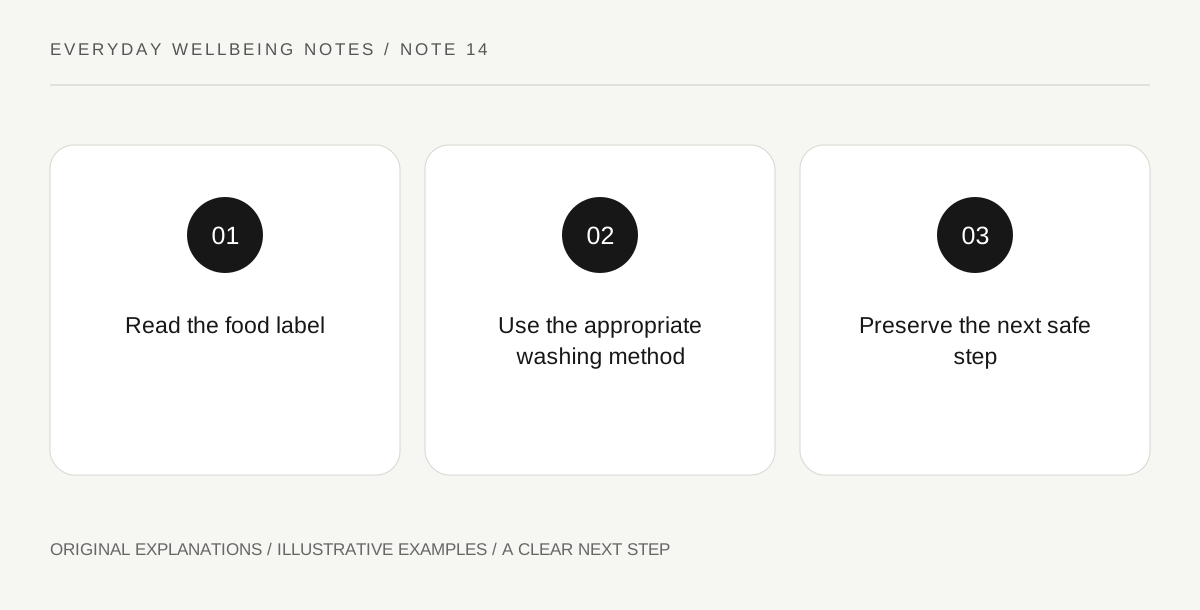
Original explanatory diagram. Read the full method and limitations below.
Start with the product’s condition and label
Identify whether you have ordinary whole produce, cut produce requiring refrigeration or a package described as prewashed and ready to eat. FDA’s produce guidance distinguishes these handling contexts. Read the actual instruction before deciding what to do next. A picture of loose vegetables on a recipe page does not override a packaged product’s directions, and washing is not a way to bypass a recall or other official warning.
Keep household chemicals away from the washing task
FDA advises washing ordinary produce under running water and does not recommend soap, detergent or commercial produce wash. Do not infer that a stronger-smelling cleaner provides a better food result. Follow appropriate guidance for firm produce and any other relevant preparation, using clean equipment. This article gives no chemical soak recipe and does not extend a disinfectant’s surface claim to food.
Plan a clean place for the next step
Before washing, identify where the produce will go afterward and keep that destination suitable for food handling. Avoid returning cleaned items to a visibly dirty outer container or placing them in a sink holding unrelated used equipment. Keep the practical sequence manageable: prepare the clean destination, follow the product’s washing instruction where applicable, and continue with appropriate preparation and storage rather than leaving perishable items out while reorganizing the kitchen.
Recognize what washing does not establish
Washing is not sterilization and does not prove that a suspect food is safe. Follow storage instructions and relevant official recall or outbreak advice. If a product is affected by a notice, read the stated consumer action instead of inventing extra washing. If your household has individual food-safety advice from a professional, keep that guidance in place. A general cleaning habit should not be expanded into a guarantee about every person or hazard.
Illustrative worked example
Illustrative example: A reader has loose carrots and a separately packaged salad labelled ready to eat. Instead of treating both with a countertop product, the reader follows the relevant food instructions, prepares a clean food-handling destination and keeps the salad’s storage directions with it. A third item named in an official recall is handled according to that notice. The fictional example does not promise that washing removes every possible contaminant.
Questions that come up
Does soap make produce safer than running water?
FDA does not recommend soap or detergent for washing produce. Follow its relevant food-handling guidance and the actual package instructions rather than transferring a countertop-cleaning routine to food.
Can extra washing replace a recall instruction?
No. A recall addresses a specific identified problem. Follow the official action for that item; ordinary washing is not evidence that a recalled product can be made suitable to eat.
References and scope
These sources support the factual background. Examples and exercises are original illustrative teaching material. References do not imply endorsement.
- FDA: selecting and serving produce — Wash ordinary produce under running water; soap and detergent are not recommended; read ready-to-eat/prewashed directions.
- FDA: food recalls — Recall notices identify affected products through packaging, codes, dates and distribution details.